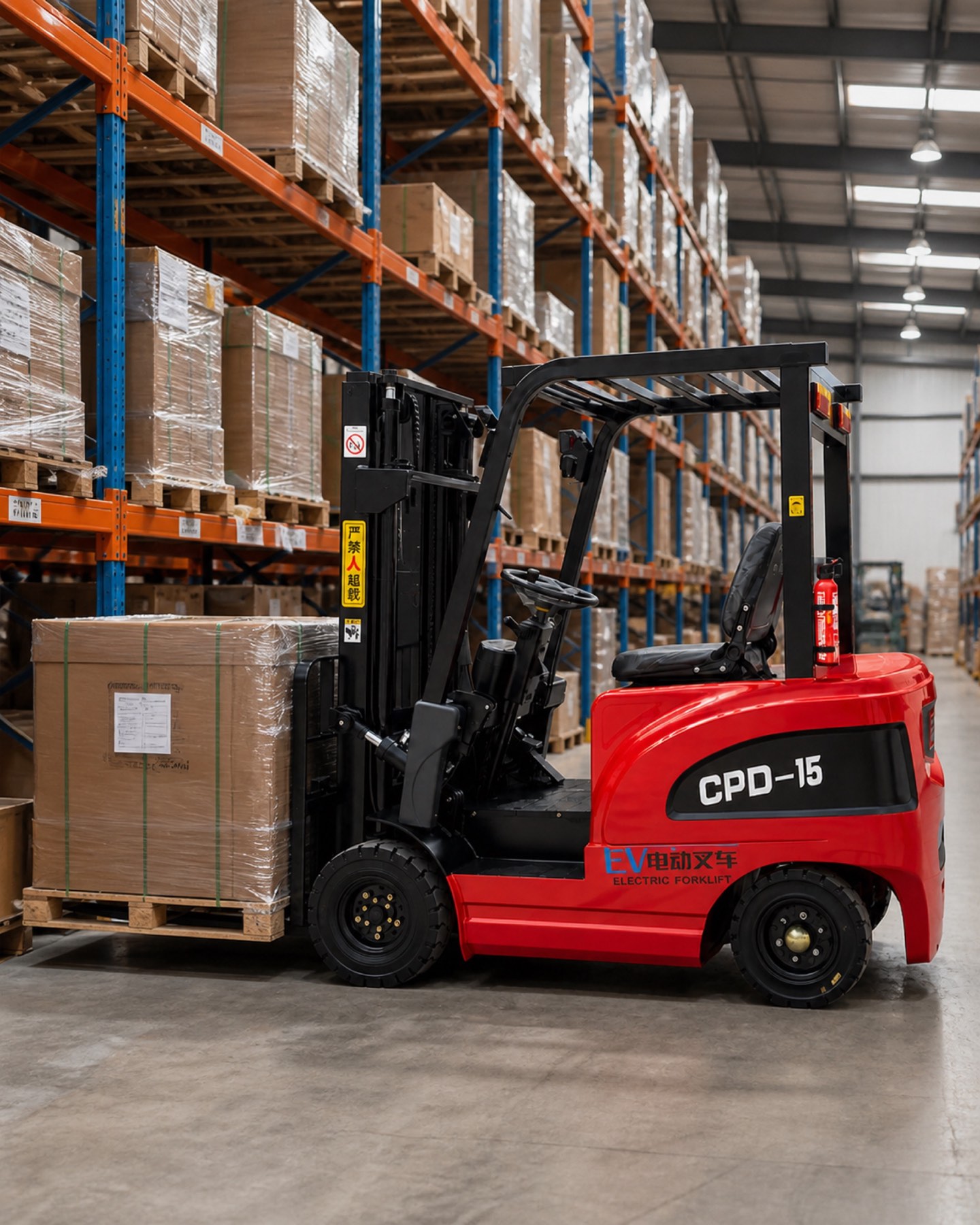
Treat a site trial as a controlled evaluation, not a product promise
An electric forklift site trial can help a B2B buying team turn an application brief into focused questions. It is most useful when the team defines what it wants to learn before a truck arrives: which regular task is being considered, which proposed configuration is being shown, what the host site permits, and who will retain the observations.
A demonstration, sample unit or temporary evaluation does not by itself approve a workplace, establish that a truck suits every load or shift, confirm capacity for a different mast or attachment, guarantee availability, or replace the delivered equipment documents. The site employer, the equipment provider and appropriately qualified people each retain their own responsibilities. This guide is a procurement-record checklist, not operating, safety, electrical, training or legal advice.
Define one decision the trial should inform
Start with the commercial decision rather than a broad request to “try an electric forklift.” A team may be comparing two configurations, testing whether a recorded pallet route should move to a formal quotation, checking whether a dealer needs more application information, or deciding which questions must be resolved before an order. Write that decision down and set a date for reviewing the evidence.
Keep the trial limited to a named application group. If the site has receiving, racking, production supply and container work, do not let observations from one route become an unstated conclusion about all four. Record the regular task, the loads discussed, the intended lift or placement work, the route and the work pattern. Use the same base information from the electric forklift buying guide that will later support a supplier discussion.
| Trial-planning field | Question for the buyer team |
|---|---|
| Decision to inform | What purchase, configuration or follow-up decision will this evaluation support? |
| Application group | Which defined task and location are in scope, and which tasks are excluded? |
| Proposed equipment | Which model, mast, battery, charger, forks and stated options are being discussed? |
| Evaluation window | When will the site review the observations and decide the next procurement step? |
| Record owner | Who will collect facts, retain documents and return unresolved points to the supplier? |
Agree boundaries before the unit is brought to site
Before a trial is arranged, the buyer and provider should make the practical boundaries visible in writing. Identify the supplying party, the site contact, the dates under discussion, the equipment reference, the proposed application and any prerequisites the provider or site has stated. Do not assume that a unit shown in a product image, a catalogue family or another customer's facility is the same configuration that will be evaluated.
The site team should retain responsibility for its own access, workplace arrangements, permitted activities and people. The supplier should be asked to state what product information it can provide for the unit or configuration under discussion. Any commercial terms for transport, insurance, demonstration, training, service or return should be handled through the parties' written agreement rather than inferred from a demo invitation.
For U.S. workplaces, OSHA's current powered industrial truck standard is a primary source within its jurisdiction. It does not authorise a generic trial plan or replace the manufacturer instructions, a workplace assessment or local requirements. Buyers in other markets should obtain guidance for their own jurisdiction.
| Boundary to record | Why it should be explicit |
|---|---|
| Provider and site contacts | Keeps product, commercial and workplace questions with the right party |
| Equipment identification | Prevents a general model name being mistaken for a specific proposed package |
| Included discussion or support | Distinguishes stated product familiarisation from site approval or a service promise |
| Application and route scope | Prevents an observation in one area from being applied to a different task |
| Written commercial arrangements | Keeps transport, time period, responsibility and return questions traceable |
Use an application record that can be compared after the trial
Prepare the measurement and load record before the evaluation. A useful file contains the regular pallet and load details, the highest placement requirement, the narrowest relevant route points, the work pattern and any known operating conditions. This is not an instruction to perform a task; it gives the buyer and supplier a common description of the requirement being considered.
Where travel space matters, record the actual aisle, doorway, turning and staging dimensions instead of relying on a general statement that the warehouse is narrow. The forklift aisle width guide provides a structure for retaining those facts. If the trial involves a charging discussion, keep the configuration and site questions separate using the electric forklift charging-site readiness checklist; a trial does not confirm an electrical installation or charger compatibility.
| Application evidence | What to retain with the trial record |
|---|---|
| Load and pallet description | Regular maximum weight, dimensions, entry direction, overhang and load centre where known |
| Lift and storage description | Normal placement height, storage arrangement and any stated overhead restrictions |
| Route notes | Relevant aisles, doors, turns, floors, ramps, staging points and transitions |
| Work-pattern summary | Expected shifts, peak periods, allocation assumptions and availability questions |
| Configuration questions | Mast, forks, attachment, battery, charger or tyre points needing supplier clarification |
Record observations as facts and questions
During and immediately after the evaluation, separate what was observed from what someone concludes. A factual note can identify the date, the defined route, the equipment reference, the pallet format described, the people present and a question that needs a written supplier response. Avoid recording an impression such as “works everywhere” or “is approved” when the observation concerned only one task, one configuration or one moment in time.
Photographs, sketches and short notes can be helpful if the buyer labels the location, date and subject. They should not be used to infer an unobserved capacity, condition, compliance outcome or suitability for another workplace. If a question arises about capacity, attachment, configuration or a modification, return it to the supplier with the actual application record and ask for a configuration-specific response.
| Observation status | How to record it |
|---|---|
| Directly observed | State the place, time, equipment reference and limited fact observed |
| Supplier statement | Name the supplier document or contact and the exact open point it addressed |
| Site question | Assign a site owner and avoid treating it as resolved by the demonstration |
| Configuration question | Send the documented load, route and equipment context for supplier review |
| Commercial question | Keep it with the quotation, trial agreement or other applicable written terms |
Turn the result into a controlled procurement next step
At the review meeting, compare the trial record with the original decision. Decide whether the next step is to gather measurements, ask for a revised configuration discussion, request a formal quotation, compare supplier responses or close the evaluation as not applicable. A site trial should make gaps more visible; it should not cause a provisional configuration to become an order specification without documentation.
If the team proceeds, ask for the proposed scope in writing and retain the trial findings beside the current quotation. Use the electric forklift quote comparison checklist when comparing responses, and use the electric forklift order change control checklist if a later revision affects the recorded configuration.
Electric forklift site-trial checklist
Before relying on an electric forklift demonstration in a B2B buying decision, confirm that:
- the decision, application group, location and excluded tasks are stated clearly;
- the proposed equipment and known configuration details are recorded rather than assumed from a product family;
- the provider, site contacts, evaluation period and written commercial boundaries are identified;
- the buyer retains a measured application record for loads, placement, route and work pattern;
- observations distinguish direct facts, supplier statements, site questions and unresolved configuration questions;
- the trial is not treated as approval of a workplace, training arrangement, charger installation or all future operating conditions;
- any capacity, attachment, modification, documentation or commercial question is returned to the appropriate party in writing; and
- the review produces a named next procurement action rather than an unsupported general conclusion.
A controlled site-trial record helps an electric forklift buyer ask better questions before committing to a configuration. Send your application brief, trial objectives and destination market to begin an electric forklift quotation discussion