Jining, Shandong, China+86 182 6471 1666

WAREHOUSE PLANNING

Forklift Aisle Width: A Practical Measurement Guide

Measure pallets, racks, doors and turning space before choosing an electric forklift for your warehouse.

Electric forklift technical guide illustration

Why aisle width belongs at the start of forklift selection

A forklift can have enough nominal capacity and still be a poor fit for a warehouse. The truck, pallet and load must turn into the storage position without contacting racking, stock or building features. That is why aisle planning should happen before a buyer confirms a model, mast or attachment.

The useful question is not simply, "How wide is the forklift?" It is, "How much clear working space does this truck-and-load combination need for this exact storage task?"

Understand the specification you are comparing

Forklift data sheets may show a working aisle width, often identified as Ast, for a stated pallet size and orientation. Treat that figure as a comparison value, not an automatic approval for every warehouse. A different pallet, overhanging load, attachment, fork length or operating pattern can change the space needed.

Turning radius is also useful, but it does not describe the complete manoeuvre by itself. Compare suppliers using the same pallet orientation, load dimensions, mast and attachment configuration. If one quotation does not state those assumptions, ask for them in writing.

Measure the real clear aisle

Measure the shortest distance between the nearest fixed or stored obstacles at the working height. Do not rely only on the distance between rack uprights. Pallets may project into the aisle, column guards may narrow a bay, and low-level protection can become the true limiting point.

Record several measurements along the route rather than one convenient point. Include:

  • the narrowest clear distance between loads or rack protection;
  • door, gate and fire-door openings;
  • columns, barriers and wall projections;
  • staging areas where a truck must turn or reverse;
  • ramps, floor joints and changes in level;
  • overhead restrictions along the travel path.

A simple plan with dimensions and photographs is more useful to a supplier than a single aisle-width number.

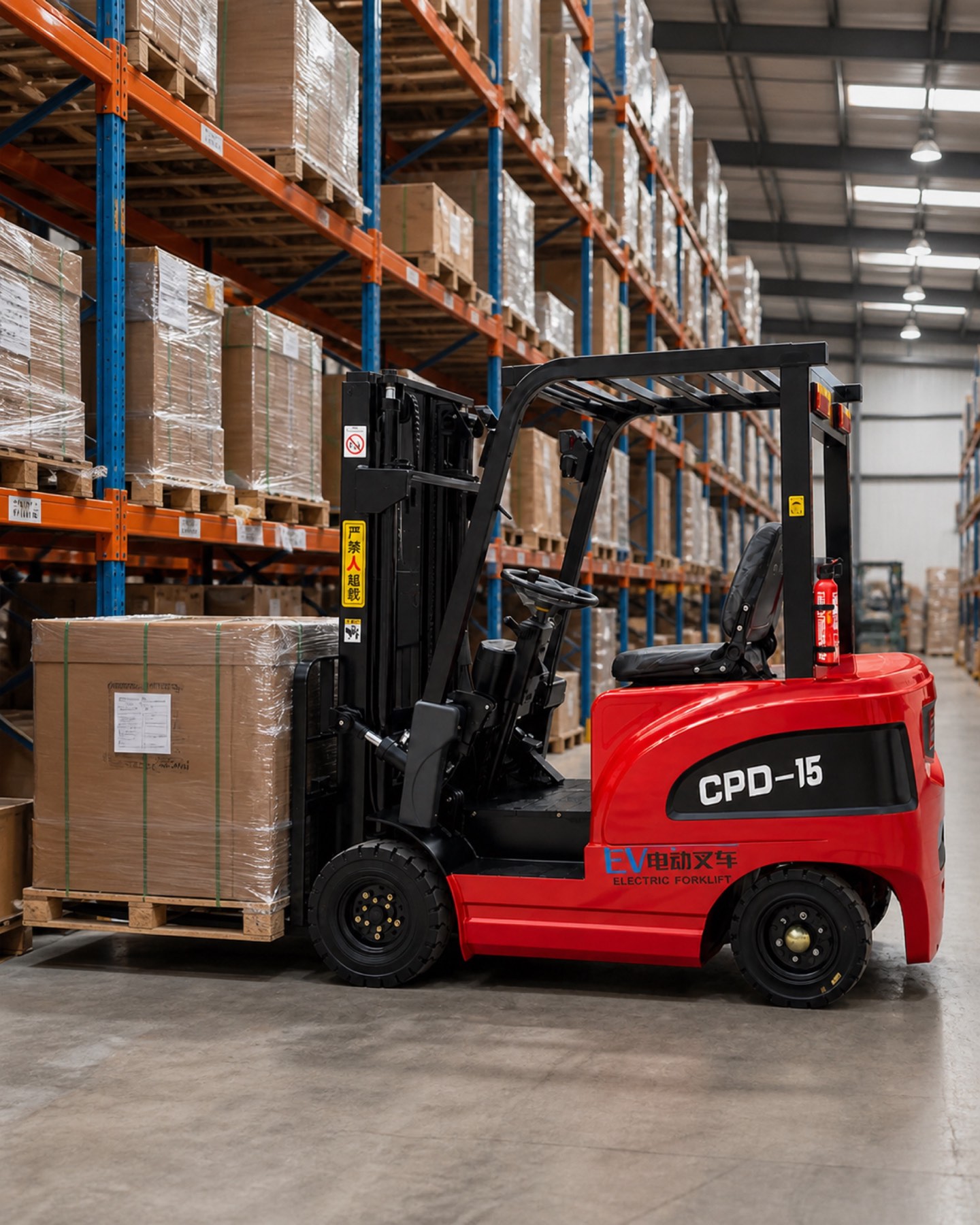
Warehouse aisle used for electric forklift planning Illustrative application image. Confirm the actual site dimensions and operating conditions before selecting equipment.

Record the pallet and load envelope

The load that matters is the largest realistic envelope, not only the most common empty pallet. Measure pallet length and width, then record any cartons, bags or wrapped goods that extend beyond the pallet. Note which side enters the rack first.

Also identify the heaviest load, its load centre and the required lift height. These details affect model and mast selection, while attachments can change both capacity and manoeuvring geometry. If the operation uses several pallet formats, document each one and design around the most demanding regular task.

Site informationWhat to record
AisleNarrowest clear width and any local obstructions
PalletLength, width and rack-entry orientation
LoadMaximum weight, dimensions and overhang
StorageTop beam height and required fork height
RouteDoors, turns, ramps and staging areas
ConfigurationFork length, mast and planned attachment

Map the complete movement

Walk the route from unloading or production to the final storage position. A truck may fit inside the rack aisle but struggle at the entrance, a cross-aisle junction or a doorway. Mark where the operator must turn, align, lift, reverse and pass other traffic.

Consider the full workflow rather than testing one isolated bay. Ask whether pedestrians share the route, whether loads wait in staging zones and whether two trucks may meet. These are site-management questions that should be reviewed by the responsible warehouse and safety personnel; a forklift specification alone cannot resolve them.

Allow for the confirmed configuration

The same base truck can require a different evaluation after options are added. Longer forks, fork positioners and other attachments may affect the load position or the way the truck approaches a pallet. Mast choice can also matter where door height or overhead clearance is limited.

For an initial comparison, review the published dimensions for the CPD-15, CPD-20 and CPD-30. Final suitability should be confirmed for the quoted configuration and actual load.

Ask the supplier for a configuration-specific check

Send the same information to every supplier so that quotations are comparable. A useful request includes a dimensioned layout, pallet orientation, load envelope, lift height, daily working pattern and planned attachments. Ask the supplier to identify the data-sheet assumptions used and any clearance that still needs site verification.

Avoid choosing a truck from a generic "minimum aisle" claim with no stated pallet or configuration. If the fit is close, arrange a competent site review or practical demonstration before final acceptance.

A buyer checklist before ordering

Before approving the order, confirm that:

  1. the narrowest point on the complete route has been measured;
  2. pallet orientation and maximum load overhang are documented;
  3. lift height, load centre and attachment are included in the review;
  4. the supplier's aisle figure uses matching assumptions;
  5. doors, cross-aisles, staging areas and overhead limits have been checked;
  6. the final truck configuration is recorded in the quotation or technical agreement.

Good aisle planning reduces guesswork in the buying process. It also gives the supplier the information needed to recommend a suitable model instead of relying on a catalogue headline.

Send your warehouse dimensions for a configuration review

Planning a forklift purchase?Send us your working conditions for a configuration review.Demander un devis →

RÉPONSE COMMERCIALE RAPIDE

BESOIN D’UNE CONFIGURATION
POUR VOTRE MARCHÉ ?

Tell us the load, lift height, quantity and working conditions. We reply within one business day.

WA