Start with the sale contract and the actual movement
Incoterms® rules give buyers and sellers a shared way to allocate named delivery points, transport tasks, costs and risk in a sale. They do not, by themselves, describe the electric forklift configuration, settle payment terms, transfer title, approve a customs filing or replace the rest of a sales contract.
That boundary matters when importing forklifts. A quotation can mention a familiar three-letter term while leaving the named place, packaging scope, carrier handover, documents or import-clearance responsibilities unclear. Before approving an order, make the agreed trade term part of the same written record as the truck model, mast, battery, charger, forks, attachments and destination-market requirements.
The International Chamber of Commerce publishes the current Incoterms® 2020 rules overview. Its guidance explains that the rules allocate costs, risks and obligations between buyer and seller. Use the official rules and qualified contract, customs and logistics advice for the transaction at hand.
Write the term with a precise named place
A three-letter abbreviation is not a complete shipping instruction. Ask the parties to record the Incoterms® rule, the edition and the exact named place or port in the quotation, pro forma invoice and final contract. A broad city, a port name without a terminal, or a destination name without an agreed point can leave important handling questions open.
For an electric forklift order, the named place should be understandable to the buyer, seller and logistics providers who will handle the shipment. If containers, consolidation, inland transport or a warehouse handover are involved, state which point is intended rather than assuming that a familiar label resolves the route.
| Contract detail to record | Why the buyer should confirm it |
|---|---|
| Incoterms® rule and edition | Keeps the commercial term tied to the version the parties intend to use |
| Exact named place or port | Makes the delivery point and handover discussion specific |
| Proposed transport sequence | Shows whether factory collection, inland carriage, port handling and destination movement have distinct owners |
| Freight, insurance and local charges | Separates stated inclusions from costs the buyer must check independently |
| Export and import formalities | Identifies what each party says it will arrange and what documents or information may be needed |
| Configuration and packing record | Connects the commercial term to the actual truck, battery, charger and accessories being ordered |
| Open points and owner | Prevents a missing responsibility from becoming an assumed promise |
The checklist is not a recommendation that one term fits every transaction. The appropriate rule depends on the agreed route, parties, transport arrangement and destination requirements.
Keep the commercial term separate from the forklift specification
An Incoterms® rule helps define delivery responsibilities; it does not establish that a proposed forklift suits a warehouse, container, rack or charging location. Keep the equipment decision in its own application brief. Ask the supplier to identify the truck and included configuration in writing, then record which conditions still need confirmation.
For the core information to give a supplier, use our electric forklift buying guide. If the order will include container loading or unloading, our electric forklift container loading checklist helps capture the route, load and clearance questions that a general delivery term cannot answer.
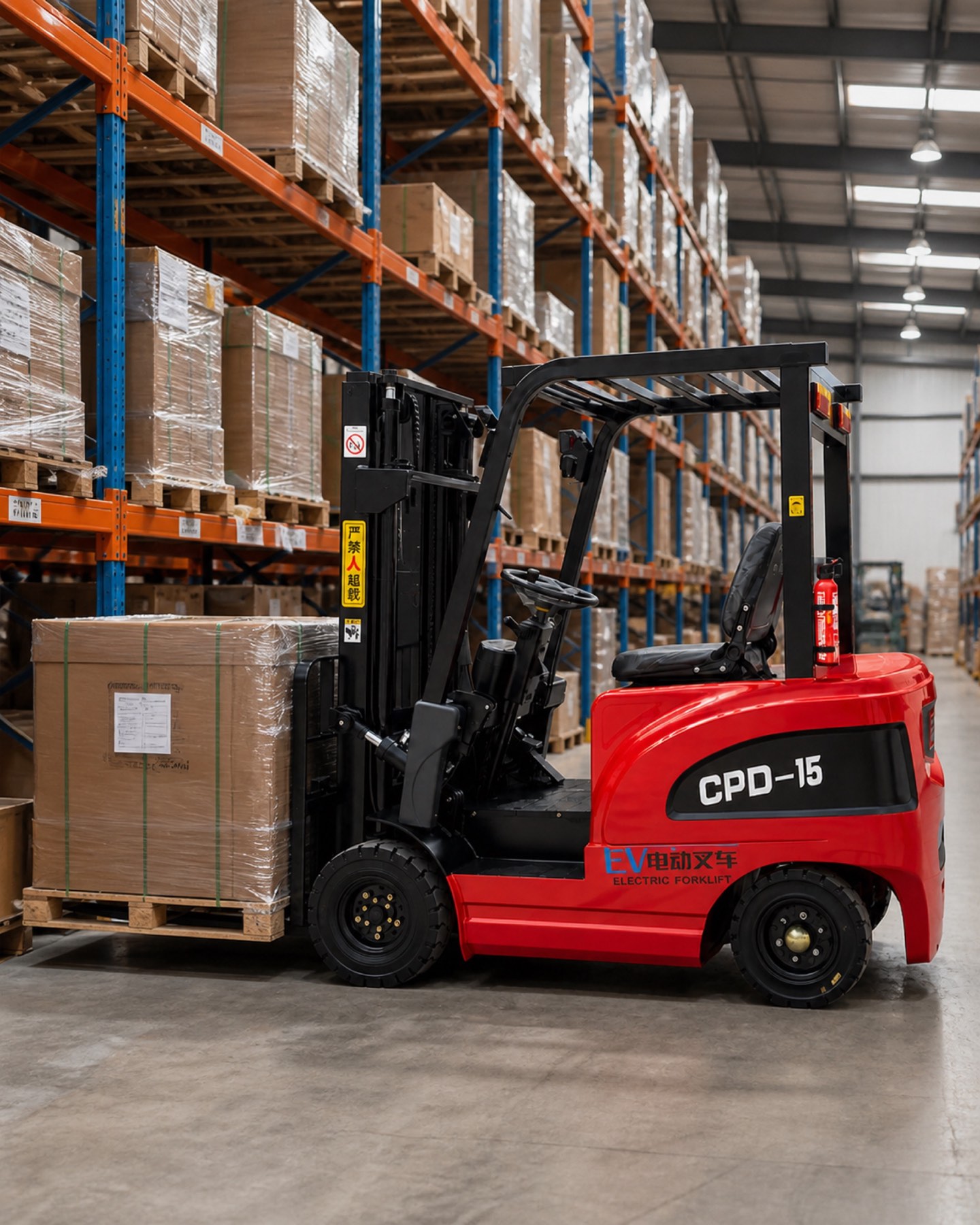
A product photograph or series name should not be treated as confirmation of what is included. The purchase record should distinguish the selected model and options from commercial terms, packing statements, freight arrangements and buyer-supplied services.
Ask where cost and risk change hands
Before an order is released, create a simple handover map. Start at the point where the agreed configuration is made available, then list each planned movement until the buyer receives the shipment. For each point, ask the parties to identify the stated responsibility, the information needed and any remaining assumption.
Do not equate a party paying for carriage with that party carrying risk throughout the same route. Under some Incoterms® rules, delivery and risk transfer can occur before the goods arrive at the named destination. The ICC explanatory notes provide the rule-specific detail; the sales contract and professional advisers should address the actual transaction.
Questions worth recording include:
- Where is the agreed delivery point for the selected rule?
- Who arranges the main carriage, and who receives carrier notices or transport documents?
- Which costs are stated as included, excluded or subject to later confirmation?
- Is any insurance obligation described, and does the buyer need separate coverage advice?
- Which party is expected to handle export, transit and import formalities under the agreed arrangement?
- What destination charges, duties, taxes, inspections or local services must the buyer review independently?
This map is a procurement record, not an instruction for customs clearance or a substitute for carrier, insurer or legal advice.
Match documents to the actual order
Import paperwork is more useful when it identifies the goods and the commercial arrangement consistently. Ask early which documents the seller expects to provide and which information the buyer or its appointed provider needs to supply. Then compare the documents against the approved order before shipment.
A buyer can request that the commercial invoice, packing information and any agreed transport or product documents identify the correct parties, actual product description, quantity and configuration references where applicable. The exact document set depends on the agreed term, transport route, destination rules and transaction. Do not assume that a document used on a previous order meets every current import or regulatory requirement.
For a pre-dispatch review that stays focused on configuration, packing and open questions, see our electric forklift pre-shipment inspection checklist. If your destination may require product-conformity documentation, use the CE documentation buyer checklist as a starting point for supplier discussion; obtain qualified local advice on actual obligations.
Avoid vague all-in language
Expressions such as delivered, door-to-door or all-in can be commercially useful descriptions, but they should not replace the agreed Incoterms® rule and a written statement of scope. If a quotation uses a broad phrase, ask the supplier to clarify the actual rule, named place, included freight and insurance arrangements, expected document handover, and every excluded or buyer-arranged item.
This is especially important where local port charges, customs duties, taxes, unloading, terminal services, inland delivery or warehouse handling may arise. A buyer should not infer that these items are included simply because a price is described as delivered. Record the supplier's answer and review destination obligations with appropriately qualified advisers.
Review the term when the order changes
Changes to the destination, port, carrier, consignee, packing method, shipment timing or delivery address can affect the questions that must be resolved. When any of those items changes, review the commercial term and named place alongside the amended equipment order.
Likewise, a later change from a base truck to a different mast, battery, charger or attachment should be reflected in the product and packing records without assuming that it changes the agreed delivery term. Keeping these records separate but cross-referenced makes the order easier to review.
Electric forklift Incoterms® checklist before ordering
Before approving an international electric forklift order, confirm that:
- the contract names the intended Incoterms® 2020 rule and a precise place or port;
- the selected forklift configuration and packing scope are written separately from the commercial term;
- the parties have recorded the stated delivery point, transport roles, costs and risk questions;
- freight, insurance, duties, taxes, terminal charges and local delivery items are marked as included, excluded or still to be confirmed;
- export, transit and import formalities have a named responsible party and a route for obtaining required information;
- expected documents are checked against the actual order, route and destination requirements;
- any change to destination, route or configuration triggers a fresh review of the relevant records; and
- unresolved contract, customs, logistics, insurance and local-compliance questions are reviewed by qualified advisers.
A clear Incoterms® record helps an import buyer ask better questions without turning a quotation into an unsupported logistics or compliance promise. Send your target market, proposed delivery point and electric forklift configuration for a quotation discussion