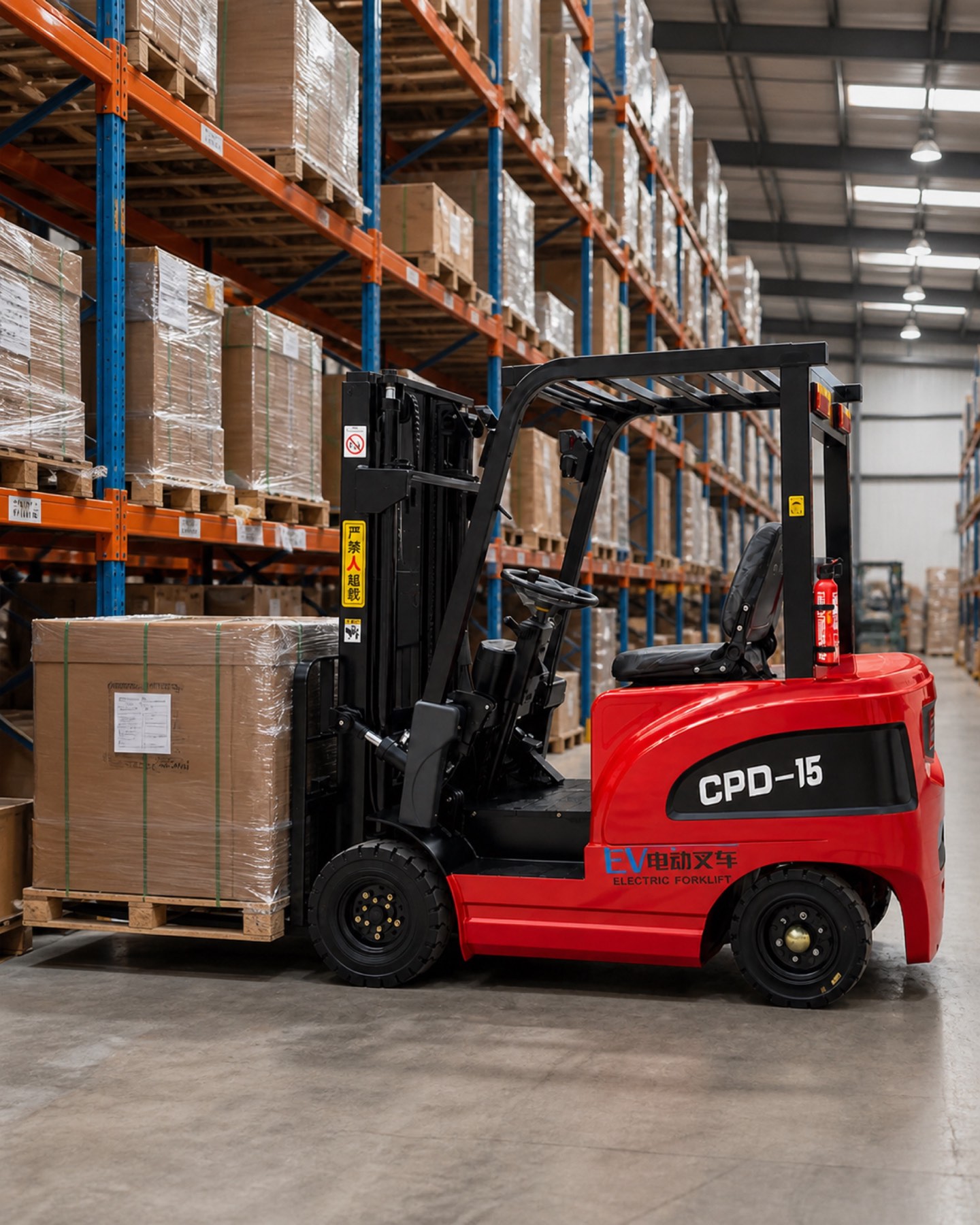
Start with the container task, not a catalogue photo
Loading or unloading a container can introduce constraints that do not appear in a normal warehouse aisle. Before asking for an electric forklift quotation, describe the complete task: where the truck starts, how it enters, what it carries, where it turns and where the load is placed afterwards.
A base model that works well on a warehouse floor may still need a different mast, fork length, tyre choice or battery arrangement for the proposed work. The supplier needs the actual operating information to assess the quoted configuration; a nominal capacity alone is not a confirmation of suitability.
Record the route and clearances
Measure the route from the staging area to the final loading or unloading point. Record the narrowest clear width, door or opening dimensions, overhead restrictions, floor transitions and any point where the truck must turn or reverse. Include the container type and the available internal clearances in the request.
Do not base a purchase decision solely on an overall truck width or a turning-radius figure. Those numbers do not describe every loaded manoeuvre. Pallet orientation, load overhang, forks and attachments can all change the space required. For a broader measurement framework, see our forklift aisle width guide.
Describe the load as it will actually move
The load information should cover more than its maximum weight. State the pallet length and width, the direction of travel, the highest regular load, any overhang and the load centre where known. If several pallet formats are handled, identify the one that creates the most demanding regular movement.
| Information for the supplier | Why it matters to the quotation |
|---|---|
| Container type and internal clearances | Helps assess entry height and working space |
| Pallet dimensions and entry direction | Affects manoeuvring and fork approach |
| Maximum load, height and overhang | Supports a configuration-specific capacity review |
| Complete travel route | Reveals turns, openings and surface changes |
| Required lift or placement height | Informs mast selection and clearance checks |
| Planned attachments or fork length | May affect load position and handling geometry |
| Daily loading pattern | Helps discuss battery and charging arrangements |
Photographs and a simple dimensioned sketch are often more useful than a short message saying that the truck will be used for container loading. Mark the constrained points rather than sending only the largest opening.
Separate loading access from lifting requirements
A forklift needs to move through the access route before it can perform the lift. Assess entry clearance, mast lowered height, the truck-and-load envelope and turning areas alongside the required lift height. If the job includes both warehouse racking and container work, document each task so the supplier can explain whether one configuration is proposed for both or whether there are trade-offs to review.
For an initial product comparison, the published dimensions for the CPD-15, CPD-20 and CPD-30 are useful starting points. Final selection should rely on the specification for the quoted truck, mast, battery, forks and any attachment—not an image or a general product family description.
Make the daily duty clear
Container work may be concentrated around arrivals, dispatch windows or production transfers. Tell the supplier how many loads are normally handled, the expected working periods, where charging can take place and whether the route includes indoor and outdoor areas. This gives a more useful basis for discussing the battery, charger and operating plan.
Use the instructions supplied for the actual truck, battery and charger. This buyer checklist does not replace the manufacturer’s operating manual, site risk assessment, operator training or local safety requirements.
Ask for a configuration-specific response
A clear quotation or technical response should identify what has been assumed and what still needs confirmation. Ask the supplier to state the proposed model, mast, battery, charger, forks, attachments and any dimensions or capacity information relevant to the task. If an aspect of the route or load is uncertain, resolve it before treating the proposal as final.
This approach complements the wider questions in our electric forklift buying guide, including operating pattern, maintenance support and destination requirements.
Buyer checklist before ordering
Before approving an electric forklift for container-related work, confirm that:
- the container and complete travel route have been measured;
- the pallet orientation, maximum load and overhang are documented;
- proposed mast, fork and attachment details are included in the review;
- working clearances have been considered for the actual truck-and-load combination;
- battery and charging arrangements match the intended duty pattern; and
- the quotation records any open assumptions or site checks.
A well-prepared enquiry helps suppliers respond with a configuration that is easier to compare and verify. Send your container and load details for a configuration discussion