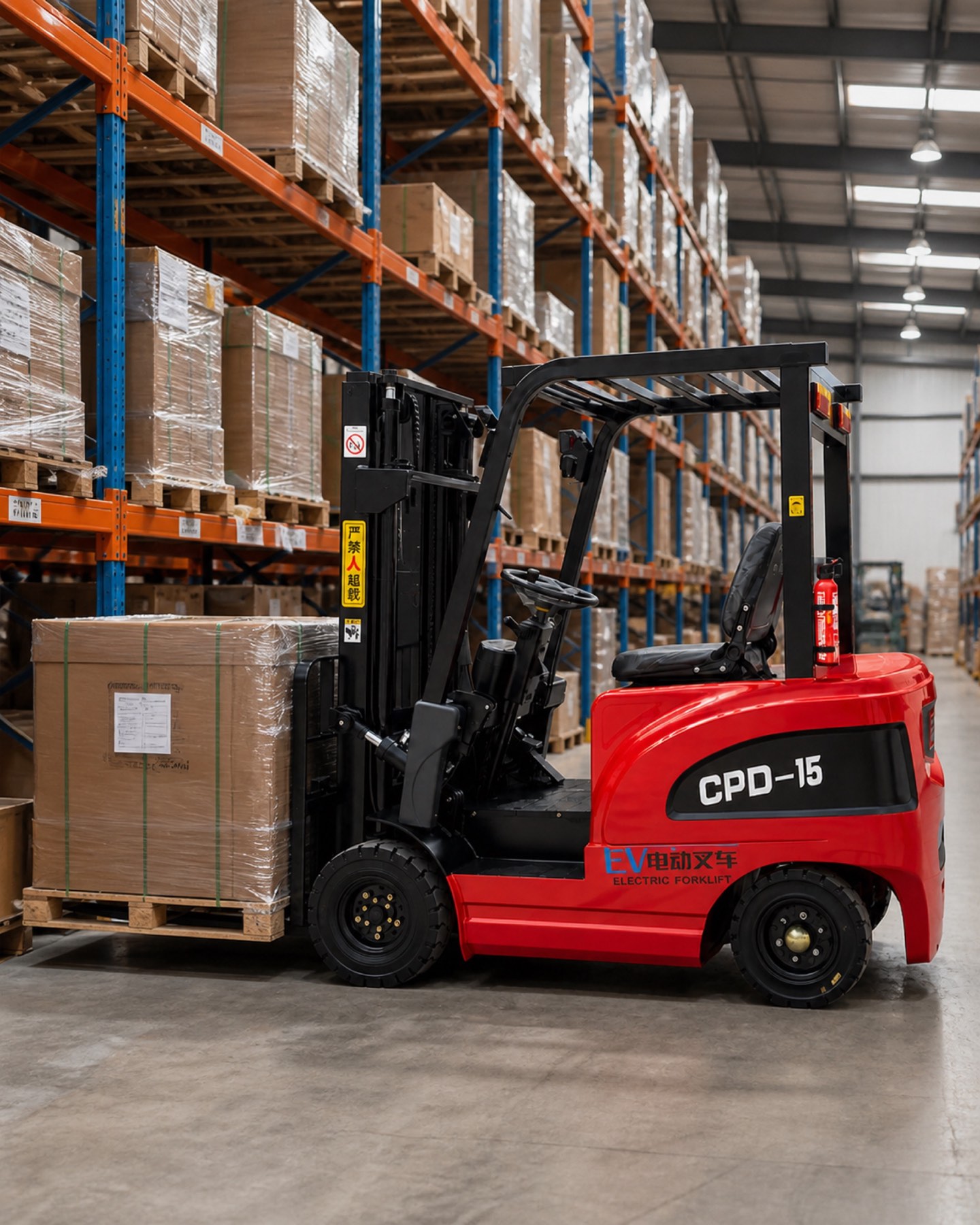
Start with the written terms and the exact truck
When an electric forklift develops a question that a buyer may need to raise under warranty, the fastest useful first step is usually a clear record—not a conclusion about the cause. A supplier, dealer, importer and site team may each hold part of the information. Bringing the relevant order, equipment identity, written terms and factual observations together helps the right party understand what is being requested.
This is a B2B record-keeping guide. It does not diagnose a fault, confirm warranty coverage, authorise repair, establish liability, instruct anyone to operate, isolate or modify equipment, or replace the delivered manuals, purchase agreement, local requirements or advice from qualified people. The written terms applicable to the actual transaction and the responsible service process determine how a claim is assessed.
Before opening a claim, identify the individual truck and the version of the terms the buyer is relying on. A model-family name, a product photograph or a general sales message is not enough. Several trucks in one fleet can have different order dates, batteries, chargers, attachments, dealers or written conditions. Keep the claim file tied to the specific unit and the documents supplied for it.
| Core record | What to keep with the claim file |
|---|---|
| Equipment identity | The manufacturer-issued identifier or other unit reference shown on the truck and its supplied records, where available |
| Commercial baseline | Purchase order, invoice or delivery reference, plus the quotation or configuration record relevant to the unit |
| Written warranty terms | The document title, version or issue date, issuing party and the clause or section being queried |
| Equipment configuration | The truck, mast, battery, charger, forks, attachment and options stated for the actual delivered package |
| Claim contact route | The supplier, dealer, importer or service contact named in the applicable documents, and any claim reference already issued |
For a pre-order review of battery-specific terms, see our electric forklift battery warranty checklist. That article helps compare proposed written terms before purchase; a post-delivery claim file should remain focused on the actual unit, the applicable agreement and factual records.
Write a factual issue summary
The first message should make it easy for the receiving party to find the relevant equipment and understand the buyer's request. Describe what was observed, where and when it was reported, who is the buyer's contact, and what support or clarification is being requested. Avoid turning an initial record into a technical diagnosis or a statement that a component is covered before the terms have been reviewed.
Use the language shown in the relevant documentation where possible. For example, record an on-screen message, a label or a condition exactly as it appears rather than translating it into an assumed failure mode. If the site has already contacted an authorised service route, include the reference and the factual information that was supplied. Do not ask staff to take apart, bypass, test or alter equipment in order to create evidence; follow the delivered instructions and the responsible site's procedures.
| Issue-summary field | A useful factual entry |
|---|---|
| Unit and location | The unit reference and the site or fleet location recorded by the buyer |
| Reported date and contact | When the matter was reported and who can answer follow-up questions |
| Observation | What the user or site team observed, without naming an unconfirmed cause |
| Operating context | The task or condition reported at the time, if relevant and authorised to share |
| Immediate status | Any factual information the responsible site process has recorded, without presenting it as technical approval |
| Request | Clarification of the claim route, document review, service contact or other defined next step |
A short, consistent summary is generally more useful than a long chain of messages. If several people provide information, retain the source and date for each item. Where an account differs, preserve the difference rather than silently choosing one version.
Assemble evidence that can be matched to the unit
The evidence needed varies by the written terms and the matter being raised. Start with records already available to the buyer, then ask the receiving party which additional material it needs. A claim file should help a reviewer match information to the specific truck; it should not be a demand for a universal set of tests or photographs.
Keep original records where possible and name any copies or annotations clearly. If photographs or videos are permitted by the site, record when and where they were taken and which unit they show. Do not share personal information, confidential layouts or sensitive customer material beyond what the parties are authorised to exchange.
| Supporting record | Why it can help the review |
|---|---|
| Delivery and order documents | Connect the request to the commercial transaction and delivered unit |
| Applicable written terms | Lets the receiving party identify the terms the buyer is asking it to review |
| Factual service or communication records | Shows what has already been reported, requested or answered |
| Equipment documentation supplied with the unit | Helps identify the relevant model and configured package without substituting a catalogue description |
| Authorised visual records, if available | Can document a factual condition while remaining subject to the receiver's instructions and the site's permissions |
| Previous claim reference | Prevents a new message from becoming detached from an existing case |
For fleets, link the claim to the unit's document trail rather than relying on a shared model name. Our electric forklift asset-register checklist explains how a buyer can keep a delivered unit connected to its own order, configuration and handover records.
Keep service, safety and commercial questions separate
A warranty question can involve different workflows. The site may need to follow its own procedures for equipment condition, access, reporting or work allocation. A dealer or service contact may need configuration-specific information before it can advise on a next step. Procurement may need to review the commercial terms and maintain a written record. Combining all of those responsibilities in one unsupported claim statement can create confusion.
Keep a small action log with a named owner for each open point. For example, a buyer can request the correct claim contact, ask which documents are needed, record that terms are being reviewed, or retain a supplier response. The buyer should not represent that a service route has approved equipment for continued use, that a site has completed a safety review, or that a warranty outcome is certain unless the responsible party has provided that conclusion in writing.
| Open point | Appropriate record owner |
|---|---|
| Which terms apply to this transaction? | Procurement or contract-record owner, with the issuing party's clarification where needed |
| Which contact should receive the claim? | Supplier, dealer, importer or service route identified in the relevant documents |
| What information is still required? | The party assessing the claim, recorded in its response |
| What is the site's current equipment-status process? | The responsible employer or site process, not the buyer's claim checklist |
| What commercial response has been given? | Procurement file, linked to the dated written communication |
For contacts, escalation boundaries and records to agree before ordering, use our electric forklift service support checklist. A service-support plan can make a later conversation easier, but it does not determine a warranty decision for a particular unit.
Send one controlled claim package
Before sending records, check that every attachment belongs to the correct unit and that the receiving party is authorised to receive it. Give the package a simple reference, state the specific assistance or clarification requested, and list the documents included. If a document is unavailable, say so instead of replacing it with an assumption.
Retain a copy of what was sent, the date, the recipient and any reply reference. When the supplier, dealer or insurer requests further information, add that request to the same file with a responsible owner and due date set by the buyer's own process. Do not treat an acknowledgement of receipt as an approval, a coverage decision, a repair authorisation or a commitment about timing.
If a configuration, order or document record was changed after delivery, preserve both the earlier and current versions. The question is not which email looks newest; it is which document the relevant party says applies to the unit and claim.
Electric forklift warranty-claim record checklist
Before submitting an electric forklift warranty claim or request for warranty clarification, confirm that:
- the file identifies the individual truck and does not rely only on a model-family name;
- the applicable written terms, issuing party and relevant order or delivery records are attached or clearly referenced;
- the issue summary separates observed facts from an unconfirmed technical or coverage conclusion;
- any information shared from the site is authorised and traceable to its source and date;
- documents, visual records and prior correspondence are matched to the correct unit and claim reference;
- the request clearly states the support, contact or clarification the buyer is asking for;
- service, workplace, safety and commercial responsibilities remain with the appropriate responsible people and processes; and
- acknowledgements, responses and unresolved questions are retained in one controlled record.
A disciplined warranty-claim record helps a B2B buyer make a clear, unit-specific request without turning a documentation checklist into a technical diagnosis or a promise of coverage. Send your forklift model, unit reference, purchase record and destination market to discuss configuration and aftersales documentation