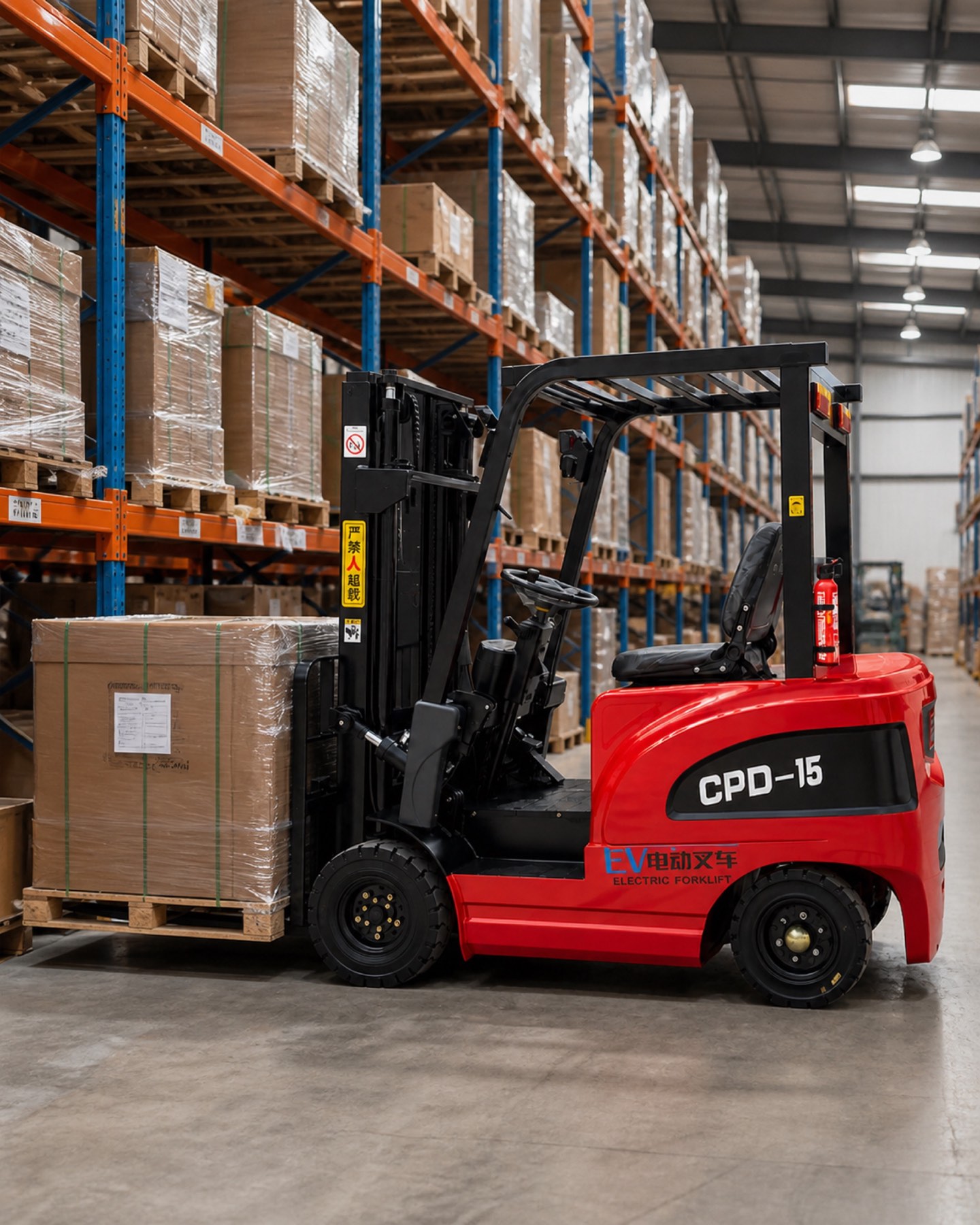
Treat the data plate as an order-verification record
A forklift data plate, often called a nameplate, is not a generic product label. It is the record that connects the actual truck configuration to information such as its stated capacity, load centre, lift height and, where applicable, attachment details. For an electric forklift buyer, that makes it a useful final checkpoint between an approved application brief and order release.
This checklist is designed to help procurement teams ask focused questions and retain the correct documents. It does not determine whether a truck is suitable for a specific load or site, calculate capacity, authorise a modification, replace the delivered equipment documentation, or replace competent safety, engineering or legal advice.
Start with one controlled configuration record
Before asking a supplier to prepare or confirm data-plate information, assemble the exact configuration record being ordered. A product-series name and a nominal capacity are not enough. The supplier needs to know the mast, forks, carriage, any attachment, battery arrangement and the load details that formed the basis of the quotation.
Keep this record alongside the quotation rather than relying on separate email threads or a catalogue image. If an item is still being selected, mark it as open. A data plate should not be treated as a way to resolve an application question that was never documented.
| Information to retain | Why the buyer should keep it with the order |
|---|---|
| Model and serial-number process, where available | Connects later documents to the actual equipment rather than a product family |
| Mast type and stated lift arrangement | Keeps the lifting configuration visible in the review |
| Forks, carriage and front-end attachments | Identifies components that may affect the quoted configuration |
| Regular load, pallet dimensions and load centre where known | Gives context for the stated handling task |
| Proposed operating conditions and route | Keeps the application brief separate but traceable |
| Battery and charger identification | Records the electric package that belongs with the truck order |
| Open questions and named owner | Prevents an assumption from being treated as an agreed specification |
For a structured way to prepare the basic supplier brief, see our electric forklift buying guide. Where a front-end attachment is being considered, add the task details from our electric forklift attachment selection checklist before requesting a final configuration response.
Ask what the stated capacity is tied to
The word capacity can be misleading when it is separated from the configuration and conditions shown on the equipment record. A buyer should ask the supplier to identify the stated capacity information for the exact truck and to explain which listed lift, load-centre and attachment conditions it relates to. Do not treat the capacity shown for a base truck as confirmation for every mast, fork or attachment combination.
The U.S. Occupational Safety and Health Administration (OSHA) explains that a nameplate can show information including capacity, load centre and maximum height, and illustrates that an attachment can change the stated capacity. Its nameplate guidance is a useful primary-source reference for understanding why the plate and the actual configuration need to be read together. It is not a substitute for the requirements that apply in the destination market or for the delivered truck documentation.
Use a written clarification request rather than asking a supplier to confirm a number in isolation. The goal is to establish the scope of the supplier's stated configuration—not to have a buyer independently interpret or recalculate the safe capacity of a truck.
Compare the plate details with the quotation and order
Before release, place the proposed data-plate record next to the final quotation, technical agreement and purchase order. Read each line as a consistency check. If a description differs, pause the release and ask which document is intended to govern the proposed supply.
| Checkpoint | Question for the order file |
|---|---|
| Truck identification | Does the model and configuration description match the final quotation? |
| Capacity statement | Is the stated capacity connected to the relevant listed conditions, rather than used as a free-standing claim? |
| Load centre and lift information | Are the values and units clear, and are they being compared to the documented application rather than assumed? |
| Mast and fork arrangement | Do the listed components match the agreed configuration and any required clearances? |
| Attachment identification | If an attachment is included, is it clearly identified in the configuration record? |
| Plate language and destination documentation | Has the buyer asked what documentation or marking questions apply to the destination market? |
| Unresolved items | Is every difference assigned to a responsible party before release? |
Do not edit, supplement or replace a plate based on a purchasing assumption. In the United States, OSHA's powered industrial truck standard addresses modifications and additions that affect capacity or safe operation, including written manufacturer approval and corresponding changes to capacity, operation and maintenance markings. That regulation applies in its jurisdiction; buyers elsewhere should obtain advice on their own market rules and follow the delivered manufacturer's instructions.
Keep attachment changes visible after quotation
An attachment discussion should not disappear once the base truck has been selected. Fork positioners, sideshifters, clamps, special forks and other front-end equipment can change the information that must be confirmed for the actual configuration. A purchase order that names an attachment but retains only a base-truck capacity reference leaves an avoidable question in the file.
When the proposed attachment changes, return to the application brief and record the load, dimensions, pick-up method, lift task and route again. Then ask the supplier to state whether the configuration documentation needs revision. The buyer should not decide that the original information remains applicable simply because the truck series is unchanged.
This is especially relevant where the task involves unusual loads, different pallet formats or a longer reach. For the broader load and route information to retain, use the electric forklift container loading checklist where container work is involved, or the forklift aisle width measurement guide for warehouse clearance planning.
Separate procurement verification from site approval
A clear data-plate record supports a better procurement file, but it does not approve a warehouse, traffic layout, rack system, ramp, operator arrangement or charging location. The buyer's responsible team should keep site, electrical, training, maintenance and local-compliance reviews with appropriately qualified people.
Likewise, a supplier response can identify the configuration it proposes without guaranteeing every aspect of a future operating environment. Keep measurements, layout drawings, load information and open questions visible. If information changes after a supplier has responded, request an updated written review rather than relying on a previous plate or document.
Build a final release checklist
The most useful final check is short, controlled and repeatable. It should show what is confirmed, what remains open and who owns each action. Use the same structure when comparing suppliers, then retain the completed version with the final order.
Buyer checklist before electric forklift order release
Before treating an electric forklift order as ready for release, confirm that:
- the purchase record identifies the exact truck, mast, forks, battery, charger and any attachment being ordered;
- the regular load, pallet dimensions, lift task and load-centre information available to the buyer are retained with the application brief;
- the supplier has been asked to identify the capacity-related information for the actual proposed configuration;
- quoted and order documents do not silently substitute a base-truck description for an attachment or changed configuration;
- any differences between quotation, technical agreement, order and proposed marking are clarified in writing;
- destination-market documentation and marking questions are assigned to the appropriate responsible parties;
- no buyer or site team treats this checklist as permission to alter equipment or determine operational limits; and
- final use, maintenance, modification and training decisions follow the delivered manufacturer's documentation and applicable local requirements.
A configuration-specific data-plate review gives procurement and operations teams a clearer handover record without turning a generic label into an unsupported safety or suitability promise. Send your load details, mast requirements, attachment list and destination market for an electric forklift configuration discussion