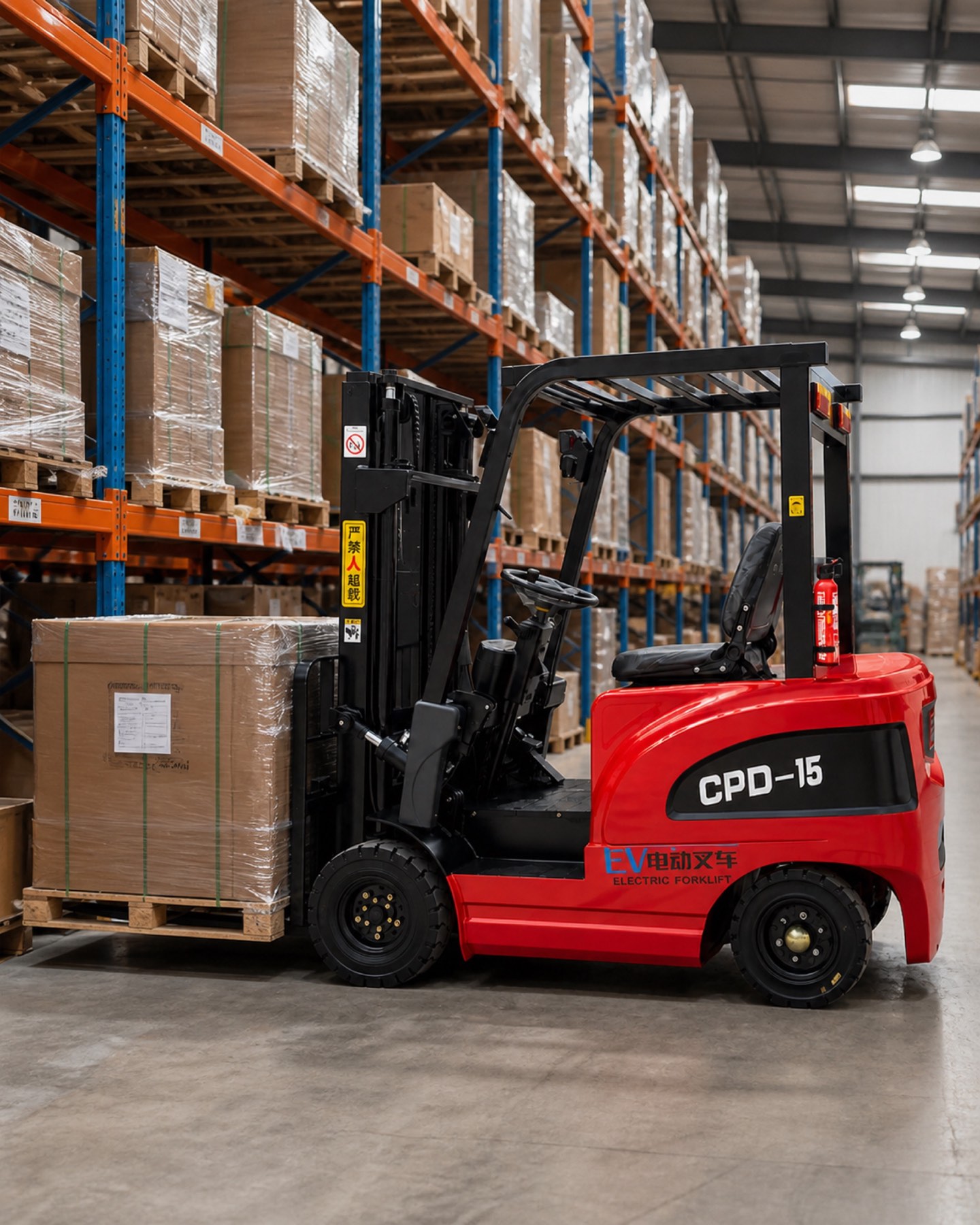
Define the decision before arranging a factory audit
A factory audit can help an electric forklift buyer collect evidence before choosing a supplier or releasing an order. It is most useful when the buyer defines the purchasing decision first: supplier qualification, a first order, a distributor programme, or a review before a larger repeat order. Without that purpose, a visit can become a general tour that does not answer the questions in the procurement file.
This checklist is for organising commercial and technical due-diligence questions. It does not certify a factory, prove that every future truck will meet a requirement, replace an independent inspection, establish legal compliance, or approve a particular forklift application. The actual order, supplied documentation, applicable rules and responsible qualified people determine those matters.
Start with the exact supplier and order scope
Before travel or a remote review, ask the supplier to identify the legal trading entity, production location being reviewed, contact person and the product scope proposed for the buyer. A trade name, product photograph or online marketplace listing is not enough to connect a visit to the party that will actually contract, build, document and ship the equipment.
Put the buyer's application brief beside the supplier information. Record the loads, pallet formats, lift tasks, routes, shift pattern, destination market and documents that matter to the proposed order. For a structured starting point, use our electric forklift buying guide. A factory audit should test the supplier's response to the real brief, not create a new set of assumptions after quotation.
| Audit input | What the buyer should retain |
|---|---|
| Supplier identity | Legal name, registered address, primary contacts and the relationship between seller, factory and exporter where relevant |
| Review location | Address and role of each facility being discussed, including whether it is assembly, warehousing, testing or another function |
| Product scope | The model family and proposed configuration being considered, not a broad catalogue claim |
| Order basis | Current quotation, application brief, drawings, option list and any technical agreement |
| Destination questions | Market, language, document and import questions that need a supplier response |
| Audit purpose | The decision to be supported, questions to close and the people responsible for evaluating them |
If a supplier relies on another party for batteries, chargers, masts, attachments, documentation or export handling, ask it to describe that scope plainly. The goal is transparency about the proposed supply chain, not an assumption that every process is performed at one location.
Review the configuration record, not only the base truck
A useful audit asks the supplier to walk through how it keeps a proposed electric forklift configuration identifiable from quotation to final order. The buyer should be able to distinguish a catalogue series from the actual proposed combination of truck, mast, forks, battery, charger, tyres, attachments and included options.
Ask which documents are used to control the configuration, how revisions are recorded, and which information must be settled before production or dispatch. Do not ask an audit host to make a verbal promise about an open configuration item; record the response and obtain the final scope in the relevant quotation or order documents.
For a planned attachment, take the load, pick-up method, lift and route questions into the audit file using our electric forklift attachment selection checklist. Where battery and charger details remain open, keep them in a separate, configuration-specific record with the charger compatibility checklist.
| Configuration-review question | Evidence to request or observe |
|---|---|
| Proposal traceability | How a quotation line is connected to the applicable model and selected options |
| Change control | How a mast, fork, battery, charger or attachment revision is shown in the current record |
| Component identification | Which records identify major supplied components for the proposed order |
| Drawings and specifications | Which version is current, who issued it and what remains subject to confirmation |
| Data and marking discussion | How configuration-specific information is checked before release, without the buyer interpreting capacity or markings independently |
| Open points | A written list of decisions, evidence or buyer inputs still required before finalisation |
The buyer does not need to prescribe a factory's internal engineering method. It is enough to establish whether the supplier can state the proposed configuration, the information it relied on and the limits of its response in writing. For the final buyer-side consistency check, see our electric forklift data plate checklist.
Ask about process controls in practical terms
Questions about quality should be specific enough to produce useful evidence. Instead of asking whether a factory has good quality, ask how it records incoming components, production checks, non-conformities, rework and final-order release for the proposed product. A supplier may use its own procedures and terminology; the buyer's task is to understand the records that can be connected to the order.
During an on-site visit, observe only what the supplier permits and avoid treating a brief view of a production area as a complete audit conclusion. If the review is remote, ask for a dated walkthrough or documents that identify the relevant facility and process, while recognising that remote material has limits. Retain notes of what was shown, what was stated and what still needs independent confirmation.
| Process area | Useful buyer question |
|---|---|
| Komponen masuk | What records identify the components supplied for an order and any acceptance checks used? |
| Assembly and testing | Which production-stage records are retained for the proposed equipment, where applicable? |
| Non-conformity handling | How are a discrepancy, correction and final disposition recorded and communicated? |
| Traceability | What order, unit or component references can link the records to the delivered equipment? |
| Document control | How does the supplier prevent an older quotation or specification from being used after a revision? |
| Release for dispatch | Who confirms the order record is complete before the shipment handover process begins? |
These questions do not establish that a process will prevent every defect or that a particular truck is safe for a buyer's site. They help the buyer decide whether the supplier can provide a controlled response and an understandable record for the transaction.
Separate factory evidence from compliance claims
A factory visit and a document review are related but different tasks. A buyer can ask what documents the supplier can discuss for the exact product and destination, but should not infer a certification, marking, approval or legal conclusion from a factory tour. Requirements can depend on the product, configuration, transaction and destination market.
For example, if equipment is intended for a market where CE rules apply, use the European Commission's CE marking guidance to understand the general framework, then have the supplier identify the documents for the proposed supply and obtain qualified advice on the actual market obligations. The audit file should clearly distinguish documents received, documents requested and matters still to be verified.
The same separation applies to workplace safety, electrical installation, operator arrangements and local import processes. Those matters are not resolved by an audit checklist or a supplier statement. Keep them with the responsible buyer team and qualified advisers.
Test commercial readiness and communication
A factory can be technically capable while the transaction record remains unclear. Before an order is placed, check that the supplier can issue a quotation that states the configuration, inclusions, exclusions, commercial basis and unanswered questions. Compare the response to the application brief rather than relying on a general assurance given during the audit.
Use our electric forklift quote comparison checklist if multiple supplier responses are under review. For a formal sourcing process, the electric forklift RFP checklist explains how to ask all suppliers for the same controlled information. If international delivery is in scope, record trade-term and named-place questions separately using the electric forklift Incoterms checklist.
At this stage, ask who will own communications after the audit: technical clarification, order acknowledgement, documentation, packing information and dispatch coordination. Avoid treating a named contact as a commitment to service levels, local support or delivery dates unless those points are stated in the applicable agreement.
Close the audit with an evidence register
The audit has value only when its findings are converted into an orderly decision record. Write a short register with the question, evidence reviewed, source, result, owner and next action. Label each point as confirmed for the current record, awaiting evidence, requires buyer decision or outside the audit scope.
Do not allow a positive impression from the visit to override an unresolved configuration, commercial or document question. Equally, do not turn one open point into a broad conclusion about the supplier without evidence. A balanced record gives the buying team a clear basis for requesting follow-up information or moving to the next procurement stage.
Electric forklift factory audit checklist
Before using a factory audit to support an electric forklift purchase decision, confirm that:
- the audit purpose, supplier identity, reviewed location and proposed product scope are recorded clearly;
- the buyer's actual load, route, lift, duty and destination information accompanies the audit questions;
- the supplier can identify the proposed configuration and explain how changes are controlled in its current order record;
- process discussions produce order-relevant evidence rather than general quality promises;
- documents, market requirements, site safety and legal obligations are kept separate from the factory-tour findings;
- quotation, exclusions, open points and trade-term questions are reviewed in writing before an order decision;
- observations, documents received, limitations and follow-up actions are retained in one evidence register; and
- the final order is released only after the buyer resolves the items that matter to its own transaction and application.
A focused factory audit gives an electric forklift buyer a stronger due-diligence record without overstating what a visit, a remote review or a supplier statement can prove. Send your application brief, destination market and supplier-audit questions for an electric forklift quotation discussion