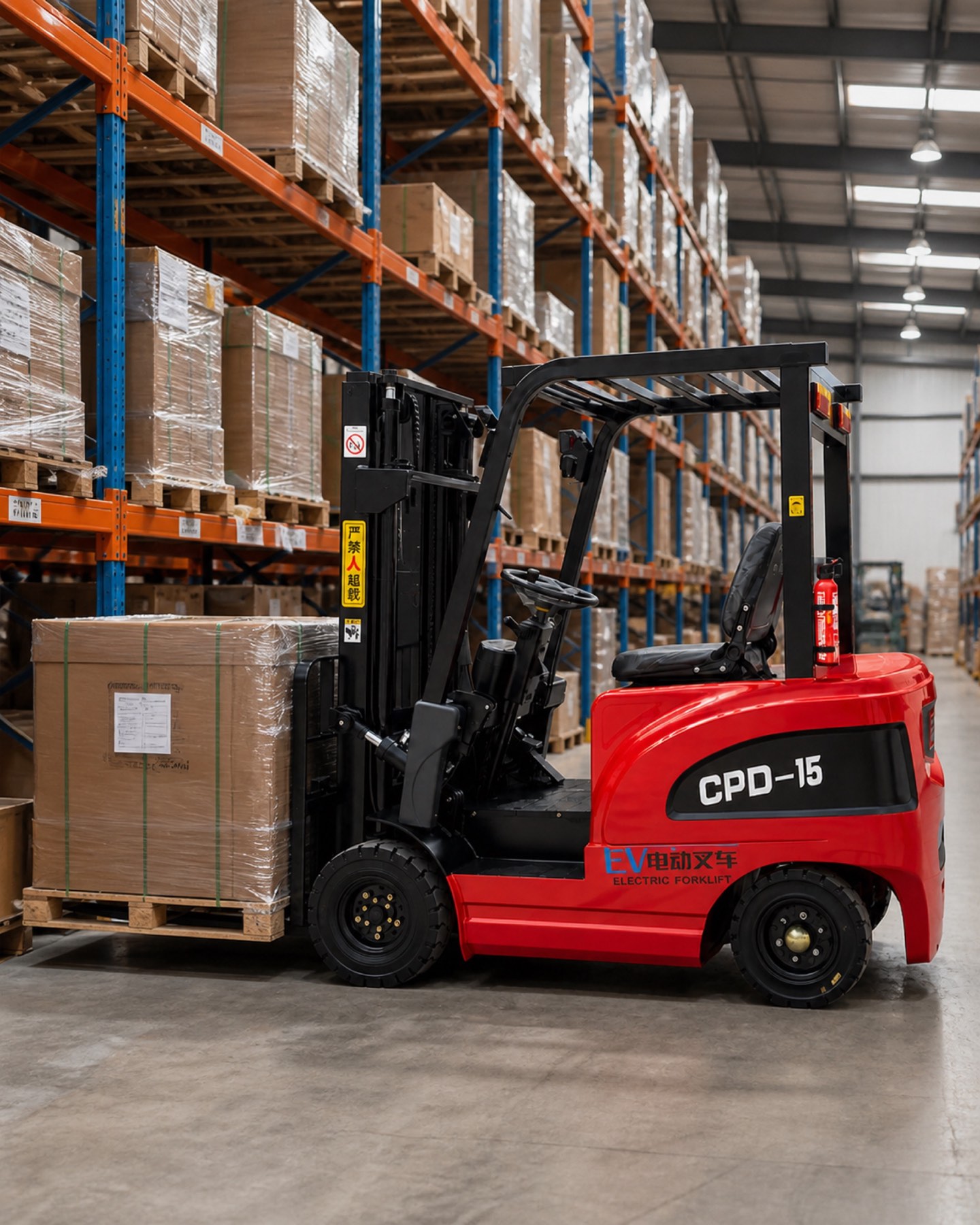
Treat the register as the fleet's identity record
An electric forklift fleet can become difficult to manage when the order record, delivered documents, current location and configuration details live in separate emails or spreadsheets. That is especially common when a buyer receives units in phases, assigns trucks to several facilities, or works through a distributor or importer. An asset register gives the team one controlled place to identify each delivered unit and find the records connected to it.
This article is a B2B record-keeping guide. It does not confirm equipment condition, maintenance status, legal compliance, safe operation, training, inspection results, warranty acceptance or suitability for a particular task. The delivered equipment documents, current data plate, purchase agreement, local requirements and responsible qualified people remain the appropriate sources for those decisions.
Give each record one unambiguous equipment reference
Create one register row for each individual truck as it is received or formally allocated. A fleet model name such as “CPD-20” is not enough on its own: several units can share a model while having different mast, fork, battery, charger, attachment or destination records. Use the manufacturer-issued identification shown on the delivered equipment and documents where available, rather than creating a label that could be confused with that identification.
If the final identifier is not yet available, retain a temporary receiving reference and mark it clearly as provisional. Link it to the purchase-order line, delivery record and the person responsible for reconciling it. Replace the temporary reference only after the buyer can match it to the delivered equipment information; do not silently overwrite an earlier record.
| Asset-register field | What the buyer can record |
|---|---|
| Internal asset reference | Buyer-controlled fleet or accounting reference, if used |
| Delivered equipment identifier | Manufacturer-issued serial number or other identifier as recorded on the equipment or supplied documents |
| Model and stated configuration | Model plus the mast, forks, battery, charger, attachments and included options stated for that unit |
| Order and delivery reference | Purchase-order line, quotation revision, delivery note or receiving record that supports the entry |
| Current assigned location | Facility, area or cost centre as an allocation record—not a claim of operational approval |
| Record owner | The person or team responsible for keeping the entry current |
| Status and open points | Received, allocated, pending reconciliation or another factual administrative status |
For the receiving evidence that should sit beside an asset record, use our electric forklift delivery acceptance checklist. Its purpose is to help buyers compare factual arrival records with the order; it does not replace commissioning or a site decision to use the truck.
Link configuration evidence instead of copying unsupported specifications
An asset register works best when it points to the controlled document that supports each important field. Copying broad catalogue specifications into every row creates a risk that an optional feature, a base-model figure or a later order revision is mistaken for the actual delivered configuration.
Keep the current quotation or order revision, manufacturer documents actually supplied, delivery record and any written clarification together in an accessible folder or document system. In the register, record the document title, date or revision and storage location. A link or reference is usually more useful than a long narrative because it lets a reviewer see whether the information applies to the individual unit.
| Evidence type | Register entry to retain | Why it helps |
|---|---|---|
| Quotation or order revision | Reference and date for the configuration agreed commercially | Connects the asset to the purchasing baseline |
| Delivered equipment record | Identifier and document reference as received | Supports matching the row to the individual unit |
| Battery and charger information | Reference to the documents supplied for the actual package | Keeps the electrical package tied to the correct truck record |
| Attachment or option note | Stated configuration document and any open question | Avoids treating a product-family feature as delivered scope |
| Change correspondence | Date, sender and controlled revision after a confirmed change | Shows which record supersedes an earlier assumption |
For the questions that should be settled before a repeat or multi-site order is released, see our electric forklift fleet standardization checklist. Standardizing a purchasing decision is different from proving that every delivered unit has the same final configuration.
Separate allocation, commercial status and technical decisions
Teams often use one spreadsheet for purchasing, operations, accounting and service communication. That is practical, but the fields should not imply that one team has decided matters owned by another. For example, “assigned to Warehouse B” is an administrative allocation. It is not proof that a route was assessed, that charging arrangements were approved, or that the truck is ready for a particular task.
Keep the register factual by separating different kinds of information:
- Asset identity: unit reference, delivered identifier, model and linked configuration documents.
- Commercial traceability: order reference, supplier or dealer contact, delivery date where recorded, and written terms or open questions.
- Administrative allocation: responsible team, current cost centre or reported site assignment.
- Document control: manuals and records actually received, their revisions where shown, and known missing items.
- Open-point tracking: a short question, the owner, the evidence requested and the next agreed action.
This structure is useful when an importer, dealer, manufacturer and end user each hold part of the record. It does not transfer warranty, maintenance, workplace or regulatory responsibility between them. For supplier-contact and document-follow-up questions, the electric forklift service support checklist provides a separate procurement format.
Reconcile records at delivery and after approved changes
Use a small reconciliation step whenever a truck arrives, changes site assignment or receives a confirmed commercial configuration revision. Compare the asset row with the current evidence; record differences as open points rather than deciding from memory which entry is correct. A mismatch might be as simple as an unresolved serial number, a document that refers to an earlier order revision, or a listed option that needs the supplier to clarify.
| Event | Asset-register action |
|---|---|
| Delivery received | Add the factual delivery reference and match the available unit identification to the record |
| Unit allocated to another facility | Update the administrative location and retain the date, source and responsible record owner |
| Order or configuration revision | Link the confirmed new document, identify what it supersedes and keep unresolved points visible |
| Missing document identified | Describe the missing item factually, assign an owner and record the request route |
| Unit leaves the buyer's active fleet | Update the administrative status without deleting the historical purchase and document trail |
Do not use the register to issue maintenance directions, verify an alteration, prescribe battery or charger work, or close a safety question. Refer those matters to the delivered instructions and the people responsible for the actual equipment and site.
Set a simple governance rhythm for a multi-site fleet
The register remains useful only if someone owns the updates. Name a record owner, a source of truth for each field group and an escalation route for mismatches. A monthly, quarterly or event-driven review may suit different fleets; the appropriate frequency depends on the buyer's own processes and fleet changes. The aim is not to invent a universal control interval, but to ensure that location, identifier, document and open-point records do not drift apart.
Before sharing a fleet extract with a dealer, service provider or internal stakeholder, limit it to the information needed for the stated discussion. Confirm internally which serial numbers, contact details, pricing records or site information may be shared. A general register should not become an uncontrolled substitute for contracts, manuals or security procedures.
Electric forklift asset-register checklist
Before treating an electric forklift asset register as a reliable fleet record, confirm that:
- each delivered truck has one distinct register entry and a clearly labelled equipment identifier or provisional receiving reference;
- the entry links to the actual order, delivery and configuration evidence rather than a generic product description;
- buyer-owned asset references are not confused with manufacturer-issued identifiers;
- administrative location and commercial status are recorded separately from workplace, maintenance and technical decisions;
- the record identifies documents received, documents still requested and the person responsible for each open point;
- approved changes point to a new controlled document without deleting the history of the earlier record;
- any discrepancy stays visible until the appropriate party provides the evidence needed to resolve it; and
- access to fleet information is limited to the people and purposes authorised by the buyer.
A controlled asset register helps a B2B buyer keep every electric forklift connected to its own purchasing and handover record without making unsupported claims about the equipment or its use. Send your fleet scope, target market and configuration questions to begin an electric forklift quotation discussion