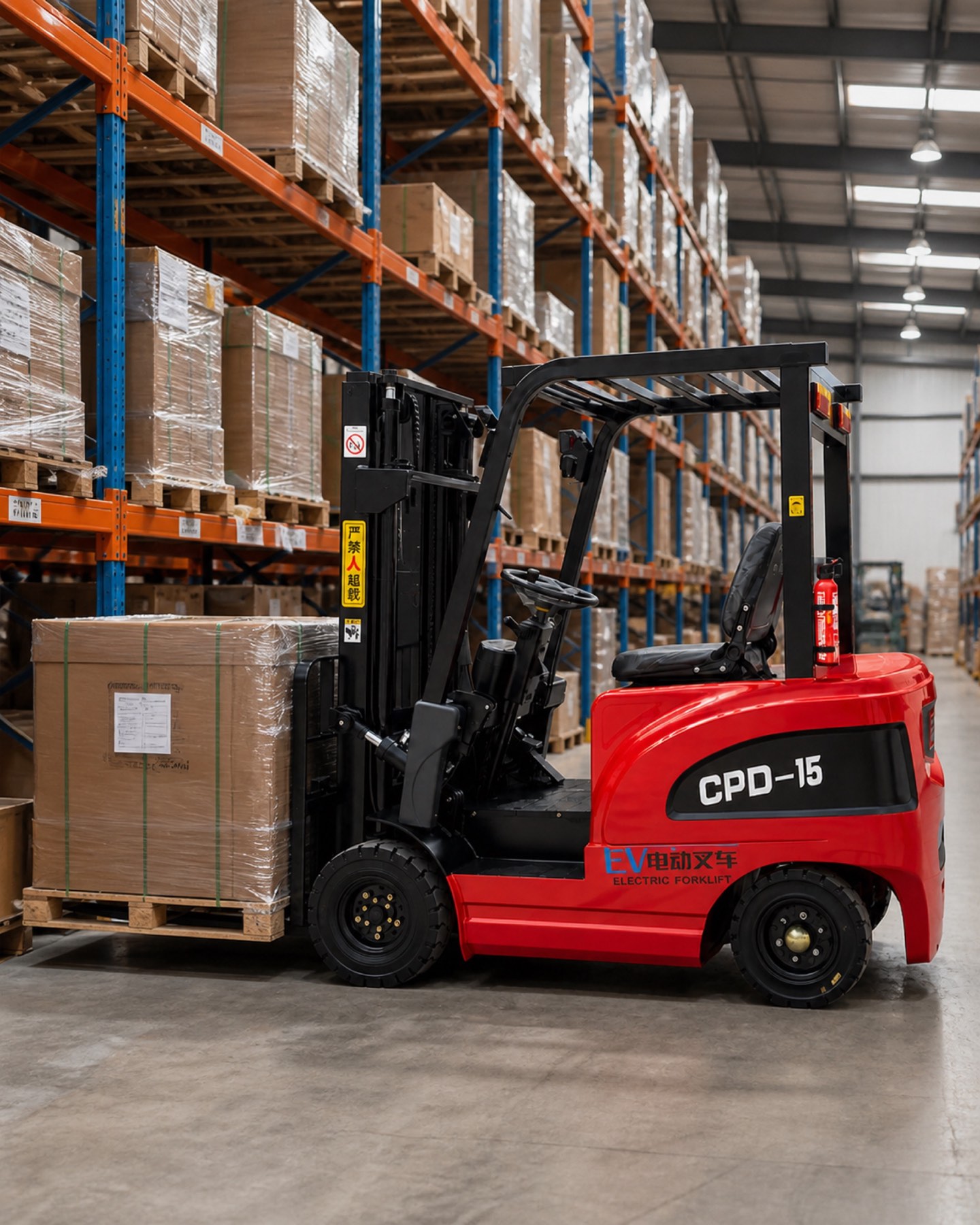
Start with the operating surface, not a tire name
An electric forklift tire discussion should begin with the work the truck will actually do. A generic tire description cannot confirm suitability for every warehouse, loading area or travel route. Before requesting a quotation, document the surfaces the truck will use, the loads it will carry, the route it will follow and the conditions that change across a shift.
The purpose is to give the supplier a clear application brief so that it can state the proposed truck and tire configuration, its assumptions and any information still needed. It is not a substitute for the delivered truck's manual, a site risk assessment or a promise that one tire arrangement will suit every facility.
Map every surface on the regular route
Walk the complete movement, from collection point to placement point, rather than describing only the main warehouse aisle. Note the floor material and condition in each zone, along with door thresholds, joints, ramps, dock plates, exterior crossings and transitions between areas. A route may be mostly smooth indoor concrete while still including one loading approach or outdoor transfer that needs to be discussed separately.
Record what is normal as well as what changes. For example, identify planned wet-cleaning periods, dust, loose packaging, debris, temperature transitions or temporary staging that affect the route. The buyer does not need to decide the tire specification alone; this information helps a supplier understand the task it is being asked to quote.
| Route information to record | Why it belongs in the buyer brief |
|---|---|
| Floor material and condition by zone | Describes the surfaces the truck will regularly travel on |
| Ramps, dock approaches and level changes | Identifies route features that should not be hidden in a general warehouse description |
| Doors, thresholds, joints and dock plates | Makes local transitions visible in the quotation discussion |
| Indoor, covered and outdoor portions | Distinguishes work environments without assuming a tire solution |
| Cleaning, moisture, dust or loose-material conditions | Gives context for site procedures and operating limitations |
| Traffic pattern and turning locations | Connects the surface description to the actual manoeuvres |
For the dimensions that should accompany this route map, use our forklift aisle width guide. It helps turn a general statement about space into a record of pallet orientation, clear width and obstruction points.
Describe the load and duty cycle in the same request
Tire selection is not an isolated product question. The regular load, load centre where known, pallet format, lift height, number of trips and duration of operation all provide context for a configuration discussion. If the operation handles several loads, identify the most demanding normal case instead of averaging unrelated tasks.
Include the truck's intended work pattern: the approximate shifts, whether it moves continuously or intermittently, and whether it travels empty for part of the route. Do not turn this information into a calculated performance claim. Its role is to let the supplier identify what it needs to assess and to separate a proposed configuration from assumptions.
A clear brief also identifies any attachments, fork lengths or mast options being considered. These may change the overall handling task, so keep them in the same quotation record rather than treating the tire request as a later accessory choice. Our electric forklift attachment selection guide explains how to keep the truck, load, route and attachment discussion together.
Ask for the proposed configuration in writing
When comparing proposals, ask each supplier to name the truck and tire configuration it is proposing for the documented work. Request clarity on what is included in the quoted unit, what is optional, which application details were used and which site questions remain unresolved. A product photo, a base-model specification or a prior order is not confirmation of the configuration for a new application.
Useful questions for the supplier include:
- Which tire configuration is included for the supplied truck?
- Which route, load and work-pattern information was used to prepare the proposal?
- Which assumptions need customer confirmation before the order is finalised?
- Do the proposed tires affect any other requested configuration item or documentation?
- What inspection, replacement and maintenance information applies to the delivered equipment?
Avoid asking a supplier simply to provide its “best tire.” That phrase does not identify the surface, load, route or operating condition being evaluated. The stronger purchasing request is a documented question about the actual work.
Separate purchasing data from operating controls
A buyer brief is valuable, but it does not assign workplace responsibilities to the manufacturer. The site team remains responsible for its traffic arrangements, floor condition, loading practices, operator training and local legal obligations. Those matters should be assessed by the people responsible for the premises and the work.
For workplaces under its jurisdiction, OSHA includes surface conditions among the workplace topics that may need to be addressed in powered-industrial-truck operator training. Its current standard also requires examination before service and removal from service when a condition adversely affects safe operation. See OSHA's powered industrial truck standard. Requirements differ by country and application; this reference does not replace local requirements, the manufacturer's instructions or a site-specific assessment.
Do not use this article as an instruction to alter wheels, tires or other parts. Repairs and replacements must follow the delivered equipment documentation and be handled by authorised people where required. If a buyer observes a condition that may affect safe operation, it should use the supplier's support process and the applicable site procedure rather than making a generic online adjustment.
Include loading areas and containers in the route map
Loading areas frequently contain the surface changes that a simple warehouse-floor description misses. If a truck will approach a trailer, cross a dock plate, work in a container or travel through an exterior transfer area, make those facts visible in the quotation request. Record the route before and after the loading point, not only the destination.
Our electric forklift container loading checklist provides a separate framework for the container, clearance and load information to collect. Where the task involves racking, doors or an overhead limit, add the measurements in our electric forklift mast selection checklist. These are linked planning tools, not a substitute for site approval.
Compare offers against one controlled brief
Send the same current route and load information to each bidder. This makes it easier to see whether the quotations are responding to the same task. A lower price is not a like-for-like comparison if one proposal assumes only a smooth indoor aisle while another includes the loading route, work pattern or requested options.
| Comparison area | Question to keep in the purchasing record |
|---|---|
| Proposed truck | Which model and configuration are named in writing? |
| Tire scope | Which tire configuration is stated as included, optional or excluded? |
| Route basis | Which surfaces, transitions and loading areas were considered? |
| Load basis | Which pallet, maximum regular load and handling pattern were provided? |
| Related options | Which mast, forks, attachments or battery items are part of the same proposal? |
| Open points | Which measurements, documents or site confirmations are still needed? |
Keep the final answer in the order record or technical agreement. A generic online specification should not silently replace the configuration that the supplier has confirmed for the actual order.
Buyer checklist before requesting a final quotation
Before asking a supplier to finalise an electric forklift tire configuration, confirm that:
- the complete regular route has been mapped, including transitions, ramps, dock approaches and any exterior section;
- floor material, visible condition and planned cleaning or contamination conditions are described by zone;
- the heaviest regular load, pallet format, handling method and working pattern are recorded;
- planned forks, mast options and attachments are included in the same request;
- the supplier is asked to identify the proposed tire configuration, assumptions, inclusions and open points in writing;
- local operating, inspection and maintenance responsibilities remain with the appropriate site and authorised personnel; and
- the final order record identifies the delivered configuration rather than relying on a catalogue image or general claim.
A detailed route brief gives a B2B buyer a more useful tire-configuration discussion and a clearer basis for comparing quotations. Send your floor plan, load details and regular travel route for an electric forklift configuration discussion